
To the Moon and Back Again
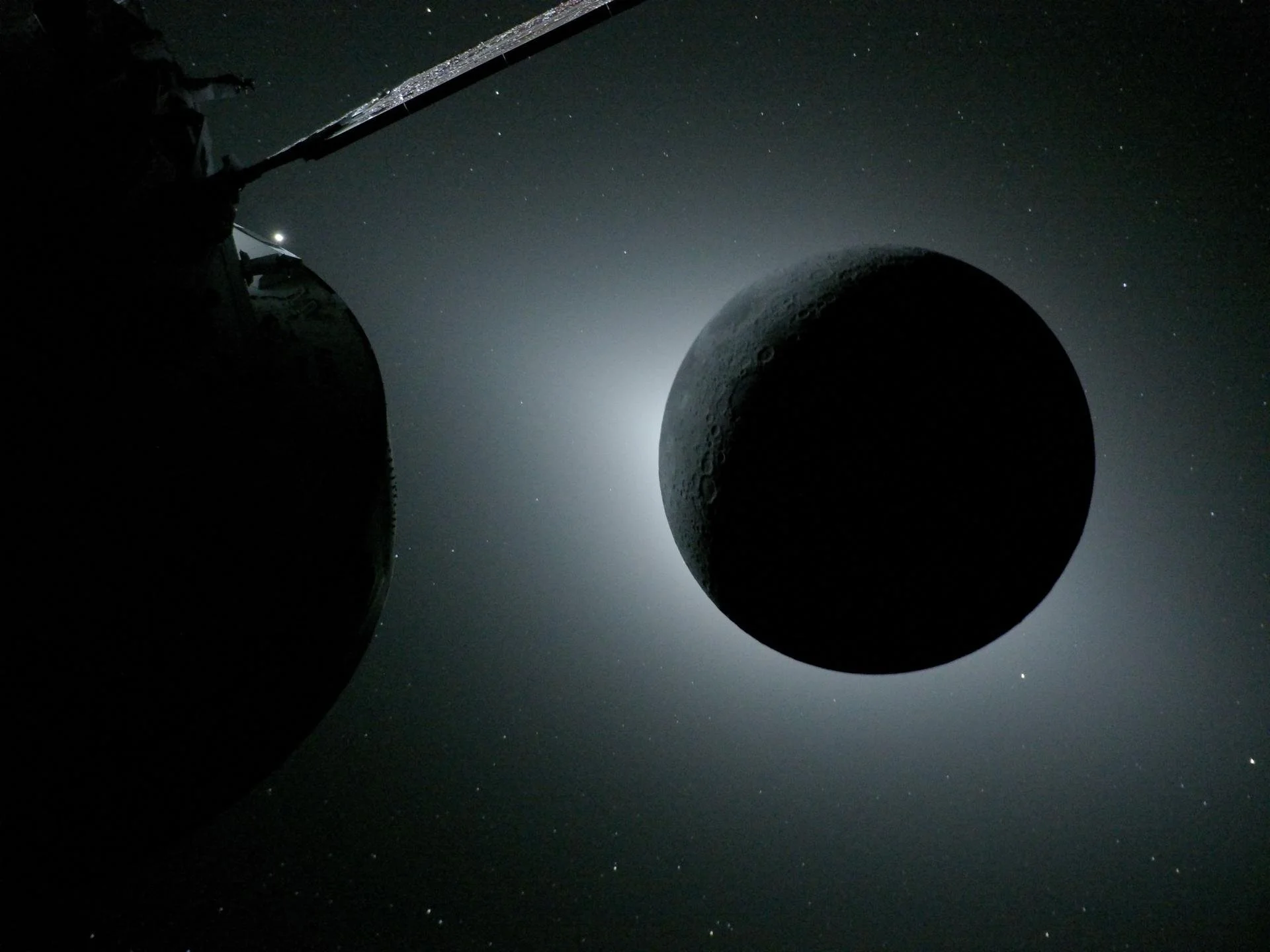
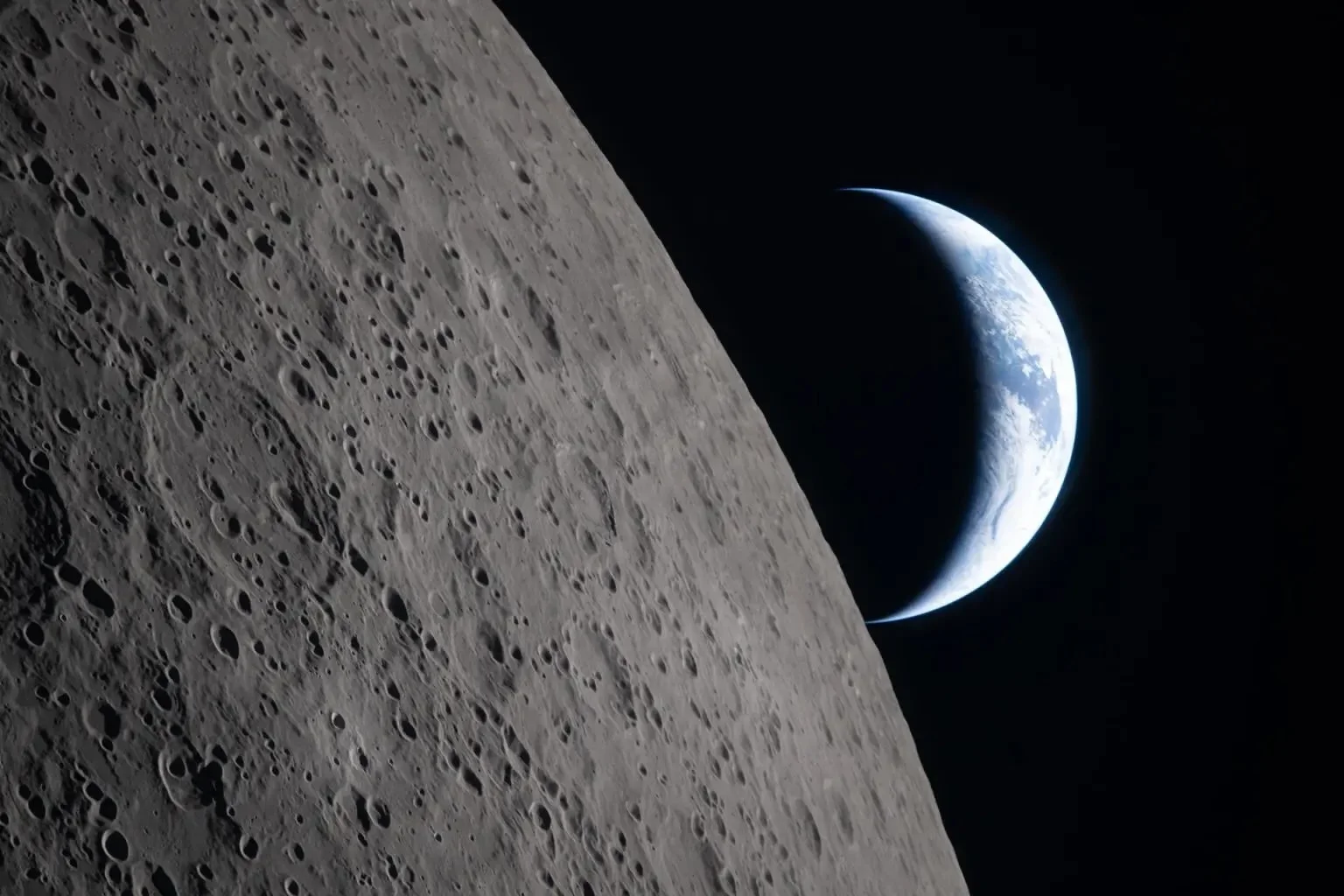
This week people all around the world have agreed on one thing; that the photographs coming from the Artemis astronauts on the dark side of the moon are awe-inspiring. And the scientific feat of NASA sending humans deeper into space than ever before, now that has to get your attention. Now we are all anticipating the Artemis splashdown in the Pacific this week.
So, in the spirit of this milestone space week, we are republishing two companion pieces that Chima and I wrote way back in the before times; pre-pandemic 2019. We were celebrating the 50th anniversary of the moon landing in 2019. Chima and I were both around kindergarten in 1969, when men landed on the moon, and both of us hold vivid memories of that momentous day. Chima was a boy in rural Mexico and I watched from Oklahoma City. Two very different perspectives of the same historic event.
Esta semana, personas de todo el mundo han coincidido en una cosa: que las fotografías enviadas por los astronautas de la misión Artemis desde el lado oscuro de la Luna son verdaderamente asombrosas. Y la hazaña científica de la NASA —enviar seres humanos más adentro en el espacio que nunca antes— es algo que, sin duda, debe captar su atención. Ahora, todos aguardamos con expectación el amerizaje de la cápsula Artemis en el Pacífico, previsto para esta misma semana.
Así pues, y en el espíritu de esta semana espacial tan trascendental, hemos decidido volver a publicar dos artículos complementarios que Chima y yo escribimos hace ya algún tiempo: en el año 2019, antes de la pandemia. En 2019 celebrábamos el 50.º aniversario de la llegada del hombre a la Luna. Tanto Chima como yo estábamos en edad preescolar en 1969, cuando los hombres pisaron la superficie lunar, y ambos conservamos recuerdos muy vívidos de aquel día memorable. Chima era entonces un niño que vivía en la zona rural de México, mientras que yo lo presencié todo desde Oklahoma City. Dos perspectivas muy distintas de un mismo acontecimiento histórico.

By Jesús Chima Castaños
That day was unforgettable for everyone in my elementary school class. We were in second grade and that morning they took us to Diana cinema to see the landing of Apollo 11 on the moon. I don't know if it was live or pre-recorded but in that moment, we were too excited to care. For many of us it was our first time visiting a cinema. Our school belonged to one of the slums of the city, with dirt roads and mostly inhabited by people newly arrived from the towns of the mountains and the coast. The houses were simple, with corrugated roofs and dirt floors and no running water or electricity.
That great event would be recorded in our memory for many different reasons. Holding hands, boys and girls, we boarded the old bus that would take us on this exciting excursion. We arrived early and the teachers instructed us to take our seats but our excitement was so great that despite their efforts, they couldn't keep us in our carefully assigned places. There were so many novelties that we could hardly contain ourselves: a huge and impressive building, the air conditioning, the cushioned seats, the popcorn and sodas with a straw, the large red carpet, the immense white screen like milk with beautiful, long red curtains suspended along on the sides. Too many things to absorb in such a short time for our virgin minds. But what excited us the most was the impressive red carpet that we ran all around like little animals in a field. For many of us, this was the first time we'd seen carpet.
Finally it was time to witness the historic event. The lights went out and the commercials that preceded the presentation began. For a moment we were all mesmerized by the spectacular images but after a while, taking advantage of the darkness, we started running around on that great big red carpet that attracted us like a magical magnet. Some of us had no restraint and we jumped up on the stage at the bottom of the big screen and from there we threw ourselves onto the majestic carpet. The teachers and the cinema staff tried uselessly to control us. I think the only time I was still and attentive to what was happening on the screen was when Neil Armstrong's feet touched the lunar surface.
The impression this event left on us was so great that I remember having left the theater walking like astronauts alongside all my friends. And even now, at 57 years of age, I keep having recurring dreams where my memories are blurred and I see the Apollo 11 landing on an infinite red carpet, only this time, I am the one that is dressed as an astronaut and am tracking those first steps on the moon while my friends jump out from the spaceship behind me onto a wonderful scarlet sea. Maybe at that time I did not understand the magnitude of those first steps and what they represented for humanity, but the image of that extraordinary human being walking for the first time on the moon was more than enough to remain fixed in my mind for the rest of my life.
Escrito por Jesús Chima Castaños
Ese día sería inolvidable para todos en mi grupo de la escuela primaria. Cursábamos el segundo grado y esa mañana nos llevarían el cine Diana para ver el aterrizaje del Apolo 11 en la luna. No estoy seguro si fue en vivo o pre-grabado pero en ese momento era lo que menos nos importaba. Para muchos de nosotros era la primera ocasión en que visitábamos un cine. Nuestra escuela pertenecía a uno de los barrios pobres de la ciudad, con calles de terracería y habitados en su mayoría por gente recién llegada de los pueblos de la sierra y de la costa. Las casas eran sencillas de techos de lámina y piso de tierra que carecían de los principales servicios.
Así que aquel magno acontecimiento quedaría grabado en nuestra memoria por diferentes razones. Tomados de la mano, niños y niñas, abordamos el viejo autobús que nos llevaría en aquella excitante excursión. Llegamos mucho antes y rápidamente los maestros nos acomodaron en las butacas pero nuestra excitación era tanta que no se daban a basto tratando de mantenernos en nuestros lugares. Eran tantas las novedades que difícilmente podíamos contenernos: un edificio imponente, el aire acondicionado, las butacas acojinadas, las palomitas de maíz y las sodas con popote, la gran alfombra roja, la inmensa pantalla blanca como la leche con aquellas hermosas y largas cortinas también rojas a los costados. Demasiadas cosas para absorberlas en tan poco tiempo por nuestras mentes vírgenes. Pero lo que más nos volvió locos fue la impresionante alfombra roja que recorrimos por todos los rincones como animalitos en el campo. Muchos de nosotros nunca habíamos visto carpeta.
Por fin llegó el momento de presenciar el histórico acontecimiento. Las luces se apagaron y empezaron los comerciales que antecedían a la presentación. Por un momento todos quedamos hipnotizados por las espectaculares imágenes pero luego de un rato, aprovechando la oscuridad, la mayoría de nosotros retomamos las correrías por la alfombra que como un mágico imán nos atraía. Algunos de nosotros sin ningún recato, nos subimos al estrado al pie de la gran pantalla durante la función y desde ahí nos lanzábamos sobre la majestuosa alfombra. Los maestros y el personal del cine, como pulpos, trataban inútilmente de controlarnos. El único momento en que estuve quieto y atento a lo que sucedía en la pantalla fue cuando Neil Armstrong empezó a caminar sobre la superficie lunar.
Recuerdo haber salido del cine junto a mis amiguitos, caminando como astronautas aunque en mis sueños algunas veces las imágenes se me confunden y veo al Apolo 11 aterrizando sobre una infinita alfombra roja y yo era él que daba los primeros pasos sobre ella, vestido de astronauta y atrás mío, todos mis amiguitos saltando en bomba desde la nave sobre aquel maravilloso mar escarlata. Quizá en aquel momento no comprendí lo que representaba para la humanidad la grandeza de aquellos primeros pequeños pasos pero la imagen de ese ser humano extraordinario dando los primeros pasos sobre la luna, fue más que suficiente para quedarse tatuada en mi cabeza por el resto de mi vida.

By Jay McAdams
On this 50th anniversary of mankind’s greatest achievement, I have been quite moved by the treasure trove of excellent footage of the moon walk, of the launch, of the cheering scientists at mission control, and of a speechless and giddy Cronkite. I have wept more than once this week while reminiscing with the footage of ordinary citizens from 1969 showing wide-eyed wonder and pride at what we had accomplished. I’ve been crying for that lost innocence.
While everything is Apollo 11 on this momentous anniversary, as it should be, the moon walk has been on my mind for several months now, since I overheard a group of teenagers from an elite charter high school in the lobby of our theatre talking about what was true and what they knew to be internet hoaxes. I confess to rolling my eyes at how little they seemed to actually understand, but I kept my superior attitude to myself. Until, that is, one of them steps into the middle of their huddle, looks up from his smartphone and says “And that they walked on the moon... that’s a big conspiracy.” I froze. Is he serious?
Then his younger brother pushes his glasses up on his nose and chimes in. “Yeah, that’s a total hoax. Never happened.” They all laugh.
That puts me over the edge and I do what only an old man would do. I step into their circle of disinformation and offer my unsolicited sage counsel, my expansive middle-aged perspective, you know, to enlighten these kids.
“I was 5...” I interrupted, “when we first landed on the moon, and I remember it like it was yesterday.” They stopped talking and looked respectfully at me, as if they knew they had to allow me to finish my words before they could tell me how stupid I was. I could see they didn’t care. They had been talking about the internet, after all, and about how smart they were, not about the truth or about “the olden days”. But I thought they needed to know the difference between reality and internet hoaxes. I couldn’t retreat or these kids would go to college in denial of man’s greatest accomplishment ever. So naturally, I went on to tell them every painstaking detail I could remember about my own experience of the moon landing in order to make it seem real to them. I lived it after all. It was real! And if I could convince them of my reality, then they’d believe the truth. Simple. All I had to do was lead my young friends to the truth, which would then cure them of their J.I.I. (Juvenile Internet Ignorance).
So I tell them how I sat on the floor as a 5-year old tow-headed boy in front of my next door neighbor’s bulky black and white TV eating dry Froot Loops out of a plastic cup, while my mom and Betty Patterson drank coffee and watched from Betty’s kitchen table just a few feet away. “I remember knowing even at 5 the context of what was going on.” I tell them. “Even kindergarteners knew what a big deal this was to all of mankind.” They stare blankly.
“I remember how Walter Cronkite talked about it with such amazement and I understood very clearly the danger in it.” I tell them. “This was grown up stuff and I was proud to be watching it, and felt like I was part of it.”
The tall handsome boy had heard enough and he threw his long hair back and looked down and started scrolling on his phone. I up the ante. “It was the first time I remember feeling proud of anything.”
“But they’ve looked on the moon and there is no flag there. There’s nothing there. It never happened.” says a senior with her fingernails painted black.
“There is too a flag up there!” I snap. “And there’s a dune buggy too.”
“Whaaaa?” says the short sophomore while tilting his nearly shaved head in slow motion.
“You mean a 4-wheeler?” adds the little conspiracy theorist who started all this.
“The moon rover!”, I say emphatically. “Haven’t you seen the footage of them driving it over the craters?” Silence. “The IMAX movie?” Silence. “Trust me, it’s up there.”
“Then why haven’t they found it?” asks the most bored of them all, not looking up from his phone
I explode. “What do you mean found it? It’s not lost!”
“Then where is it?”
“What do you mean where is it? It’s on the moon!” I say pointing to the daytime sky. “Parked ...somewhere ...wherever they left it ...up there ... on the moon.” I could feel myself unraveling and knew that although my answers were correct, I wasn’t convincing them of anything except that old people are crazy.
What upset me most was that these high schoolers, some of whom will be going to college in just a few weeks, not only don’t believe that one of the most pivotal achievements of humanity ever even happened, but worse they don’t understand the ramifications either way. They don’t think it matters one way or another. To them it’s a binary choice. They don’t understand what it would mean if the entire country had indeed been fooled by our government for the past half century. Nor do they grasp the inspiration of what man really did a half century ago. Don’t know don’t care. They shrug and move their conversation to another internet hoax. Just like that.
I stand there, failed, old, and disappointed in myself for not being able to convince them of something so basic. I feel frustrated at the world that has led us to this point. Reflexively I did what I’ve learned to do in moments when I feel self-conscious, I pull my phone out of my pocket looking for validation. Just like them. I stared at the blank screen in my hand and thought for an instant about throwing it against the brick lobby wall. But instead I grip it tighter. I know that I couldn’t live without my instant connection to disinformation any more than they could. I too am a digital captive.
So while I have reveled this week in the glorious anniversary footage of Armstrong’s first steps on the moon, it has been bittersweet because I can’t get those teens and their internet conspiracy theories out of my mind. I look at the footage of innocent kids from my generation watching in awe as people did the undoable and I’m sad for the kids of today who seem to know less about the world than a kindergartener knew in 1969. That word hoax is back again, confusing the confused. Technology has moved us forward since the 60’s, to be sure. But in some ways, technology has walked us back from the greatest leap we’ve ever taken.
Escrito por Jay McAdams
En este quincuagésimo aniversario de el logro más grande de la humanidad, he estado bastante conmovido con este tesoro de imágenes excelentes del paseo lunar, del lanzamiento, de los científicos vitoreando en el Centro de Control de Misiones, y del comentarista Cronkite feliz y sin palabras. He llorado más de una vez esta semana mientras recordaba las imágenes de ciudadanos ordinarios de 1969 asombrados y orgullosos de lo que habíamos logrado. Pero una de las razones principales por las que he estado llorando es por esa inocencia perdida.
Mientras todo el mundo habla del Apollo 11 en este aniversario gigante de los primeros pasos sobre la luna, como debería de ser, ese paseo lunar ha estado en mi mente por varios meses, desde que escuché a un grupo de adolescentes de una escuela secundaria chárter de élite en el lobby de nuestro teatro hablando sobre lo que ellos piensan que es verdad, y lo que piensan que es engaño. Confieso haber puesto mis ojos en blanco por lo poco que parecían entender, pero mantuve mi actitud superior para mi mismo. Hasta que uno de ellos se paró en medio de su círculo, levantó la vista de su celular, y dijo, “Y que ellos caminaron en la luna… esa es una conspiración gigante.” Me quedé pasmado. ¿Es serio?
Luego su hermano menor se arregló los lentes e intervino. “Si, eso es un engaño total. Nunca pasó.” Todos se ríen.
Eso me llevó al extremo e hice solo lo que un adulto podría hacer. Entré a su círculo de desinformación y ofrecí mi sabio consejo no solicitado, mi perspectiva de mediana edad expansiva, ya saben, para ilustrar a estos niños.
“Tenía cinco años…” Interrumpí, “cuando aterrizamos en la luna por primera vez, y lo recuerdo como si hubiera sido ayer.” Dejaron de hablar y me miraron con respeto, como si supieran que tenían que dejarme terminar mis palabras antes de que me pudieran decir lo estúpido que era. Podía ver que no les importaba. Después de todo, estaban hablando sobre la internet y sobre cuán inteligentes eran, no sobre la verdad o los viejos tiempos de mi juventud. Pero pensé que debían saber la diferencia entre la realidad y los engaños de la internet. No podía retirarme, o si no los chicos irían al colegio el próximo año negando el logro más grande de la humanidad. Esto era más grande que una charla casual sobre sus iPhones. Así que naturalmente, les dije cada detalle minucioso que podía recordar para hacerlo sentir real para ellos. Lo viví, después de todo. ¡Fue real! Y si podía convencerlos de mi realidad, entonces creerían y sabrían la verdad. Era simple. Lo único que tenía que hacer era dirigir a mis amigos jóvenes hacia la verdad, que luego los curaría de su I.J.I (Ignorancia Juvenil de la Internet).
Les conté sobre como me senté en el piso, un niñito rubio de cinco años en frente de la televisión voluminosa en blanco y negro de mi vecina, comiendo Froot Loops directo de una tacita de plástico, mientras mi mamá y Betty Patterson tomaban café en la mesa de su cocina a solo unos pies de distancia. “Recuerdo saber aún a los cinco años el contexto de lo que estaba pasando.” Les dije. “Hasta los niños del kinder sabían que esto era un gran logro para la humanidad.” Me vieron con la mirada vacía.
“Recuerdo como Walter Cronkite lo habló con tanto asombro, y comprendí muy claramente el peligro en ello.” Les dije. “Esto era cosas de adultos, y estaba orgulloso de poder mirarlo, y me sentí como si fuera parte de ello.” El chico alto y guapo del grupo había escuchado suficiente, miró hacia abajo y empezó a utilizar su celular. “Entendí la magnitud de lo que habíamos logrado aún a los cinco años y me sentí orgulloso. Era la primera vez que recordaba que me sentía orgulloso de algo.” Les confié.
“Pero han visto la luna y no hay ninguna bandera ahí. No hay nada ahí. Nunca ocurrió.” dijo una estudiante de último año en la secundaria con las uñas de las manos pintadas de negro.
“Que si hay una bandera allá arriba!” Grité. “Y un buggy también.”
“Queeeee?” dijo el estudiante de segundo año mientras inclinaba su cabeza como si fuera en cámara lenta.
“Quieres decir un vehículo de cuatro ruedas?” añadió el pequeño teórico de la conspiración, quien empezó todo esto.
“No! El vehículo lunar,” dije enfáticamente. “No has visto el metraje (video) de ellos manejándolo sobre los cráteres? La película IMAX?” Silencio. “Créeme, está allá arriba.”
“Luego, porque no lo han encontrado?” preguntó el más aburrido de todos sin levantar la vista de su celular.
Exploté. “¿Qué quieres decir ‘encontrado’? No está perdido!”
“Entonces, ¿dónde está?”
“¿Qué quieres decir con dónde está? ¡Está en la luna!” Dije, apuntando hacia el cielo diurno. “Estacionado… en algún lado… donde sea que lo dejaron… allá arriba… en la luna.” Podía sentir que me estaba desentrañando, pero no estaba convenciendolos de nada excepto que las personas mayores están un poco locas.
Lo que más me molestó fue que estos estudiantes de secundaria, algunos de cuales irán a la universidad en unas pocas semanas, no solo no creen que uno de los logros más importantes de la humanidad haya ocurrido, sino que, peor aún, no entienden las ramificaciones de ninguna manera. Piensan que no importa de una manera u otra. Para ellos, es una elección binaria. No entienden la importancia de lo que los humanos han logrado. No entienden lo que significaría si todo el país hubiera sido engañado por nuestro gobierno y los medios de comunicación durante el último medio siglo. Y si los hombres realmente caminaron en la luna hace cincuenta años, eso también debería tener un gran significado y contexto para sus vidas. Pero no para ellos. Ni saben, ni les importa, y ni saben lo que no saben. Se encogieron de hombros y movieron la conversación a otro engaño de la internet.
Ahí me levanté derrotado, viejo, y decepcionado en mi mismo por no poder convencerlos de algo tan básico. Me sentí frustrado del mundo que nos ha llevado a este punto, aún en el país más rico del mundo. Reflexivamente hice lo que he aprendido a hacer en momentos cuando me siento inseguro: saqué mi celular de mi bolsillo, buscando validación.
Igual que ellos. Miré fijamente hacia la pantalla en blanco en mi mano y pensé por un instante en arrojarlo contra la pared de ladrillo del lobby. Pero en vez de eso, lo agarré más fuerte. Sé que no podría vivir sin mi conexión instantánea a la desinformación más de lo que ellos pueden. Yo también soy un preso digital.
Así que a pesar de que me deleité esta semana con el glorioso video del aniversario de los primeros pasos de Armstrong en la luna, fue algo agridulce porque no puedo olvidar a esos adolescentes y sus teorías de conspiración d lal internet. Miro el metraje (video) de los jóvenes inocentes de mi generación mirando con asombro mientras los hombres hacían lo que no se podía hacer, y me entristezco por los jóvenes de hoy que parecen saber menos sobre el mundo que un niño del kinder sabía en el 1969. La palabra ‘engaño’ ha regresado de nuevo, confundiendo a los confundidos. La tecnología nos ha permitido avanzar desde los 60s, eso es seguro. Pero de alguna manera, la tecnología nos ha hecho caminar hacia atrás del salto más grande que jamás hayamos dado.